








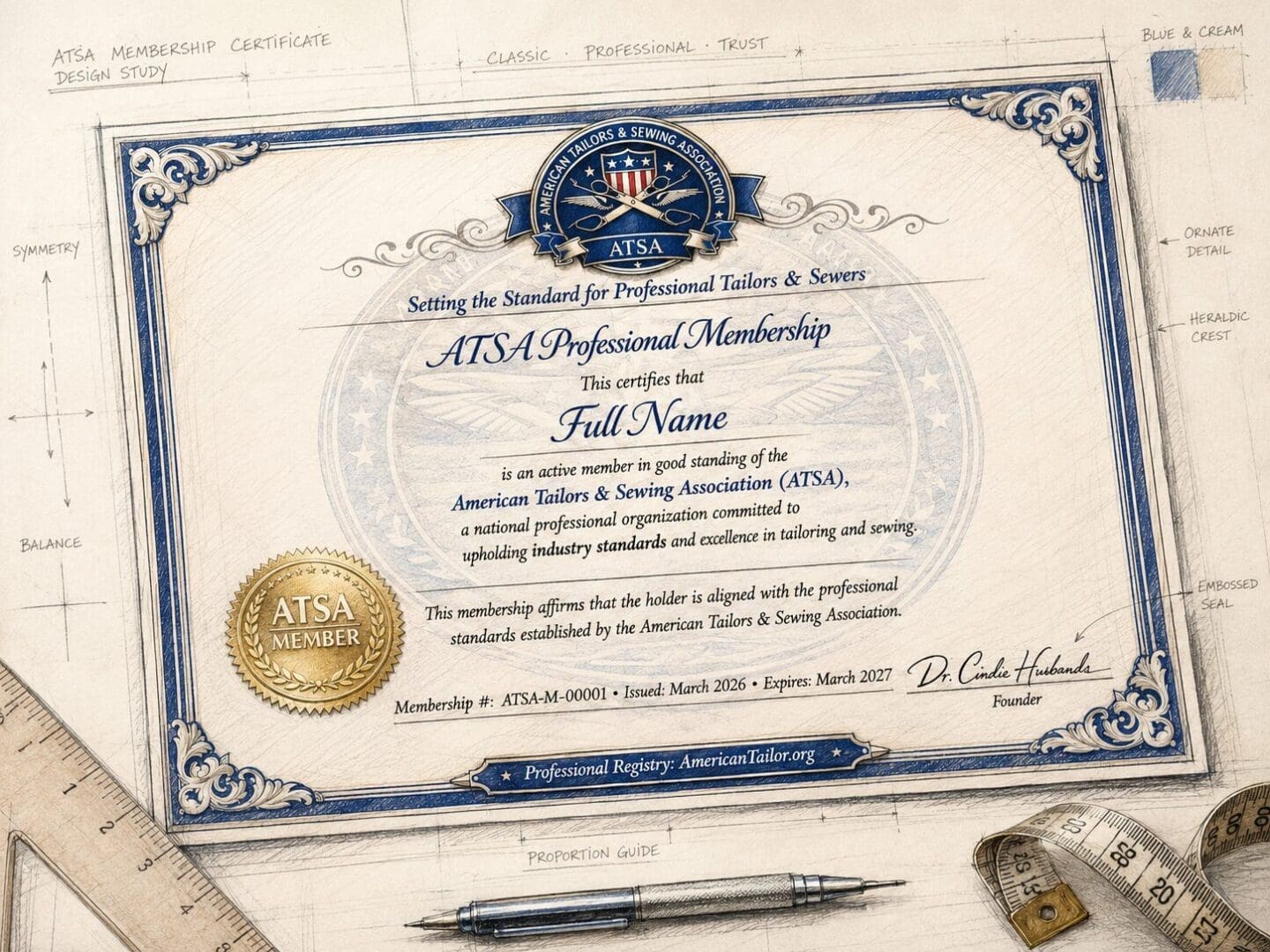
Credentialing & Certification
ATSA credentialing pathways bring greater structure, consistency, and professional recognition to tailoring, alterations, fitting, and related sewing trades.
Our certificates and certifications support individuals, employers, schools, and workforce partners with clear standards for professional knowledge, skill development, assessment, and advancement.
Whether beginning with fit, advancing through professional tailoring, specializing in bridal alterations, or preparing instructors to deliver standards-based training, ATSA provides a structured pathway connecting learning, credentialing, and professional practice.
Certified Tailoring Instructor (CTI)
Preparing Instructors to Lead with Standards
For instructors and training partners preparing learners for credentialing and employer readiness.
The Certified Tailoring Instructor (CTI) course prepares instructors and training partners to deliver standards-based instruction that supports learner progression, credentialing, and employer readiness.
CTI strengthens consistency in teaching, assessment, coaching, documentation, and remediation so learners are better prepared for professional pathways in tailoring, fitting, and alterations.
Includes:
- Standards-based instruction practices
- Learner assessment and feedback
- Coaching and remediation methods
- Documentation and evaluation tools
- Alignment with ATSA Standards
- Support for credentialing readiness
Best for:
- Tailoring instructors
- School and workforce training partners
- Shop trainers and lead staff
- Programs preparing learners for certification
- Organizations building professional training pathways
Certified Professional Tailor (CPT)
Certified Professional Tailor Series
For individuals building professional knowledge in men’s alterations and tailoring standards.
The Certified Professional Tailor series is a four-part certificate pathway focused on core alteration categories, garment structure, professional technique, and quality standards.
Topics:
- Module 1: Hemming & Trouser Breaks
- Module 2: Waistband, Seat & Tapering
- Module 3: Jacket Sleeve Shortening
- Module 4: Jacket Body Alterations
- Scenario-based assessments
- Certificate issued for each completed module
Best for:
- Tailors and alteration specialists
- Retail tailoring departments
- Workforce training programs
- Professionals preparing for national certification
Certified Fit Professional (CFP)
For fitters, retail associates, managers, and professionals who communicate garment changes.
The Certified Fit Professional pathway builds foundational knowledge in garment fit, body measurement, fitting communication, and professional marking standards.
Includes:
- Garment fit and measurement fundamentals
- Professional fitting-room communication
- Marking and alteration-ticket standards
- Common fitting issues and corrections
- Final assessment and certificate of completion
Best for:
- Retail fitters
- Sales associates
- Alterations managers
- Workforce learners
- Professionals preparing for tailoring pathways
Certified Bridal Tailor (CBT)
For professionals working toward bridal alterations standards.
The Certified Bridal Tailor pathway is designed to support professional knowledge in bridal gown structure, fitting, marking, hemming, bodice adjustments, bustles, trains, and final quality control.
Includes:
- Bridal gown construction fundamentals
- Bridal fitting and marking procedures
- Strap, shoulder, and bodice adjustments
- Bridal hemming standards
- Bust and corset fitting
- Bustles, trains, and final quality control
Best for:
- Bridal alteration professionals
- Tailors expanding into bridal work
- Bridal shops and alteration teams
- Workforce partners preparing learners for specialty pathways
Opening Fall 2026
Employer & Workforce Credentialing
For organizations that want structured training connected to professional standards.
ATSA works with employers, schools, agencies, and workforce partners to support certificate-based training pathways for sewing, tailoring, fitting, alterations, and bridal career development.
Organizations may use ATSA credentialing pathways to support:
- Employee onboarding
- Upskilling and retention
- Workforce development pilots
- Training-to-employment pathways
- Professional standards across teams
- Access to the jobs board and professional registry